Thanks ChatGPT AI for writing the following from notes compiled using other chatbots.
Residents’ Reactions to Prefabricated Homes in Britain, from the Second World War to the Present
Prefabricated homes—commonly known as “prefabs”—were introduced in Britain during and immediately after the Second World War as an emergency response to severe housing shortages caused by wartime bombing and years of underbuilding. More than 150,000 homes were constructed under the government’s Temporary Housing Programme between 1945 and 1949. Although designed to last around 10–15 years, the lived experiences of residents reveal a much more enduring legacy. Across the decades, reactions to prefabs show a consistent pattern: early relief and gratitude, strong community attachment, later nostalgia and resistance to demolition, and renewed interest in prefabrication in contemporary housing debates.
Thanks Claude AI for writing the following from notes compiled using other chatbots.
LABOUR EDUCATION POLICY
A PROPOSAL
Raising Standards in Primary Education Through Direct Instruction
Status: Draft Policy Proposal | Audience: Shadow Education Team | February 2026
Executive Summary
Around one in four children in England leave primary school unable to read at the expected level, with comparable deficits in writing and arithmetic. This failure has profound lifelong consequences: poor literacy is associated with limited employment prospects, lower earnings, poorer health outcomes, and reduced civic participation. The economic cost to the UK has been estimated at £81 billion per year.
A substantial body of research, including the largest educational experiment ever conducted in the United States, consistently identifies Direct Instruction (DI) — the systematic, scripted teaching method developed by Siegfried Engelmann — as the most effective pedagogical approach for teaching foundational literacy and numeracy in primary schools. Yet DI is used in fewer than 1% of UK primary schools.
This paper argues that a Labour government should introduce a phased, supported programme of Direct Instruction adoption in primary schools, beginning in areas with the worst educational outcomes. This is not a proposal to eliminate teacher autonomy across the board; it is a targeted, evidence-based intervention for foundational skills where the evidence for DI’s superiority is especially strong.
“The Royal Town Planning Institute (RTPI) has not published or led any dedicated research specifically studying how residents of prefab estates feel about living there.” – ChatGPT
“The RIBA (Royal Institute of British Architects) has not specifically studied the reactions of residents in prefab estates, but they have published insights on community housing design and the importance of considering residents’ needs in estate regeneration projects.“- DuckAI
Asking the bots about prefab living …
Microsoft Copilot
Sources paint a remarkably consistent picture: what began as an emergency measure became, for many, a beloved way of life.
1. Post-War Period (1940s–1950s): Relief, Gratitude, & Pride
Residents who moved into prefabs after the war overwhelmingly described them as a huge improvement over bomb-damaged housing or overcrowded lodgings.
Key themes:
Modern conveniences: Prefabs offered hot running water, indoor bathrooms, fitted kitchens, and refrigerators—luxuries many working-class families had never had before.
A sense of dignity and privacy: After years of wartime disruption, families valued having their own self-contained home.
Optimism: Prefabs were seen as symbols of national recovery and technological progress.
Although officially “temporary,” with a planned lifespan of about ten years, residents often treated them as proper homes and invested emotionally in them.
Compiled with help from PerplexityAI, ClaudeAI, ChatGPT & DeepSeek.
Our vision
Britain stands at a crossroads. Working families can’t afford secure homes. Young people face a lifetime of debt or permanent renting. Wealth concentrates in ever fewer hands, while millions live in poverty in one of the world’s richest countries. At the same time, the climate crisis deepens and our economic model strains under low investment, low productivity and stagnant wages. jrf+3
These ideas for a new Labour Party manifesto set out a new course: tackling inequality at its roots, building the homes we need, regulating markets in the public interest, and creating sustainable, well paid jobs while restoring our environment. We also propose changes to tackle the unbalanced state of UK news media. These challenges are connected; our solutions are, too.
Our programme is bold, evidence led and honest about uncertainty. Broad outcomes are foreseeable, but no government can predict every consequence of major reform with precision. Existing economic models were built for a different era and cannot fully capture the impacts of transformational change. We therefore commit to a rolling programme of review: policies will be monitored, evaluated and, where necessary, adjusted to stay aligned with our goals of fairness, sustainability and shared prosperity.
When a new house is sold, a large payment has gone to the landowner. This payment is assured when planning permission is granted, multiplying the value of the land by hundreds of times.
The shortage of new homes keeps the cost of all housing high. This shortage starts with a shortage of places where new build is allowed – because of the lack of planning permission.
Planning permissions (& other) restrictions reward the rich and affluent, landowners and existing home owners, and penalise the less affluent, particularly the young.
Below are some estimates made by AI chatbots of the proportion of the value of a new house in the UK that goes to the landowner. The landowners cut derives from and artificially short resource – planning permission. Here is a summary summary table…
Economist Gary Stevenson points out that the wealth of the very rich has grown so much that they are buying assets, such as property, forcing up prices for everybody else: Fewer people can afford to buy their own homes. Stevenson”s advocates taxing wealth to stop the rich getting too rich.
For the present, he avoids being to specific about the exact nature of a wealth tax. Here, I propose two specific solutions. First: taxing property and returning the proceeds equally to each of UK’s 52 million adults. Second: Taxing land to do the same. I have developed these with the help of the chatbot, Claude AI.
This note proposes the construction of sufficient prefabricated homes to meet UK housing need. They would be sited near existing settlements or transportation routes. The proposal downplays the role of new towns, which take too long to build and will cause high carbon emissions in their construction.
Park Homes
Park homes are one form of prefabricated home delivered to site by specialist transport companies on modified lorries. They are mostly put on specially designed sites, referred to as parks. They are single storey. A typical park home has roughly the same floor area as a new 2 bedroomed house of traditional construction. Park homes are a tried and tested form of prefabricated homes, with over 100,000 park homes in the UK.
This post starts by asking Microsoft Copilot a question on planning. After answering Copilot composes a poem. The poem is passed to ChatGPT for analysis. Amazing results.
—–
Question to Microsoft Copilot: A scheme to build lots of park homes could(in the extreme) drastically cut the £9tn value ofUK property. Is this a problem or a bonus?
That depends entirely on whose ledger you’re reading from—and what kind of future you’re trying to build.
Park Homes vs £9tn Property Market: Problem or Bonus?
Listening to Building Soul on Radio 4 has given me some depressing deja vu – I’d heard similar stuff when I worked at Leeds School of Architecture for most of the 1970s. The presenter, Thomas Heatherwick started the programme with
“There’s been an epidemic of inhuman building plaguing or cities stripping them of character, joy and soul. I call it the blandemic.”
Heatherwick criticised today’s buildings for their box shapes and ubiquitous flat surfaces of Modern Movement Architecture with its rejection of ornament.
My previous email used results from the Grok AI chatbot.
I have now used other chatbots about the proposal to add 2000 park homes per year to the housing provision in the York Local Plan. The results show that this proposal should be given consideration.
Summaries of the chats follow. PDFs of the chats are appended.
Best wishes
Geoff Beacon
—–
Question…
How would the housing market change if York allowed 2000 park homes per year in addition to existing plans? Assume these park homes are on land owned by York Council. Compulsory purchased if necessary. Assume environmentally friendly homes and mostly car free sites. Give environmental impact in addition to other analysis.
Here is Claude AI’s summary of a chat with Claude AI …
This conversation explored the opposing positions of two Oxford professors on methane’s climate impact:
The Core Question: Whether Peter Scarborough and Myles Allen have opposing views – and they do, specifically regarding methane accounting.
Myles Allen’s Position: Developed the GWP* metric that significantly downplays methane’s climate impact, arguing that conventional methods overstate livestock emissions by 300-400%. His approach suggests stable cattle herds cause warming at only one-quarter the rate of standard metrics.
Peter Scarborough’s Position: Uses conventional GWP100 metrics in his dietary emission studies, showing meat-eaters have roughly twice the greenhouse gas emissions of vegans. His work treats methane with its full warming potential under standard accounting.
Key Insights Revealed:
Allen’s flaw: His GWP* metric ignores that methane’s intense warming effects persist and cause feedbacks long after the molecule breaks down (despite methane’s 12-year atmospheric lifetime, its warming impact can last centuries).
Scarborough’s limitation: While more comprehensive than Allen’s approach, GWP100 still underestimates methane’s immediate dangers by about 3x compared to GWP20 metrics (methane’s 20-year impact is ~84-87 vs. ~28-36 over 100 years).
The Bottom Line: Both approaches have significant flaws, but Allen’s GWP* appears to more severely underestimate methane’s climate impact by focusing only on atmospheric residence time rather than the full warming consequences. This represents a fundamental disagreement about how to measure and communicate the urgency of addressing methane emissions from livestock.
I append the six parts of my emails “Bring back the prefab” as a PDF. These were the result of using various AI chatbots. Here is a summary:
Part 1 told how the post-war prefabs were socially successful. They were designed with people in mind: one-storey homes with green space and private gardens. “Compared to later tower blocks or cramped terraced housing, prefabs gave people space and light, creating a more relaxed environment for community life”.
Part 2 pointed out that the construction of modern wooden prefabs caused a fraction of the emissions of greenhouse gases compared to houses built in a traditional fashion. It also pointed out that prefab construction is much cheaper.
Part 3 concerned neighbourliness, which was high for the socially uniform populations of prefab and council house estates. The social fabric of council housing rapidly worsened in the 1980s driven by policy changes & economic shifts.
This led to a policy of mixed-income developments, where social housing for low income residents was mixed with private housing for more affluent residents. Critics argued that it could be seen as a form of “soft” social engineering—a way to manage or disperse poverty without addressing its root causes.
Mixing low income housing with market priced housing, means mixing high car ownership residents with low car ownership ones.
Part 4 concluded that out of town developments that provide one, two (or even three) car parking spaces are not suitable for lower-income people with limited car use. Such developments also have very high carbon emissions.
Part 5 concluded that new towns are not an answer. They take decades to build, and have high embodied carbon. Estates of car-free modern (mostly wooden) prefabs (with solar roofs, heat pumps &tc) are a good start. They should be placed next to existing settlements to provide low carbon services for them.
Part 6 noted that a plot of agricultural land big enough for a house is valued at less than £1000 – but when planning permission is granted its value leaps to between £100,000 to £150,000 so a large part of the cost of a new house is created by planning permission. This accrues to the land owner. For a £300,000 house on the fringe of York, Copilot has estimated:
Under an Optimistic Decarbonisation Scenario, ChatGPT has estimated the emissions from road transport for York in 2030. These alone make York’s target of net-zero emissions by 2030 impossible.
The rich are getting richer and they buy our houses.
Economist Gary Stevenson notes that as the rich buy houses, their prices rise so the young can no longer afford to be home owners. He argues that the rich have become too rich and have bough up much of the housing stock – a tax on wealth is needed to stop this trend.
Stevenson points to the time after WW2 when marginal tax rates were very high. This made it difficult for the rich to accumulate too much wealth. At this time the working class could own homes.
An embarrassing admission. I found myself actually sobbing listening to Chuck Berry’s You never can tell on Youtube. After playing several different versions – and crying at them all – I switched to Dire Straights, Queen, and even Bob Dylan and the crying stopped. It’s taken me a day or two to unpick this embarrassing reaction.
A teenage wedding
Chuck Berry’s song, written in 1964, full of optimism, started “It was a teenage wedding and the old folks wished them well” but now weddings for the young are much rarer.
The Office of National Ststistics shows there were hardly any teenage weddings in 2022 compared to 1960. In the 1960s the most weddings were in the age range 20-24. Now, the most weddings are in the age range 30-34.
Housing the youngsters
Chuck Berry sings…
They furnished off an apartment with a two room Roebuck sale.
These teenagers in 1964 could afford somewhere cheap to live and buy a little furniture. Since then, the cost of setting up home has vastly increased. In real terms houses are now six times more expensive than in the 1960s.
My 3 minute specch about the York Local Plan was met with silence – althoughsince then I have had indications that it was appreciated. I’m inferring that the opinion is that my views do not take into account political reality. I get that.
However, the Local Plan (as is) will continue the rush towards environmental destruction and increasing inequality. Reversing these trends will require a break with current “political reality”.
Here are a few extra notes followed by a transcript of what I said to the Council.
New towns are a cumbersome way of solving the housing crisis.
Housing in York, A letter to York Council, 12 February 2025
Councillor,
Young people cannot afford to buy homes.
In England, the average house costs over eight times the average salary but, in the 1970’s, it was three and a half times. Now, young people cannot afford to buy homes.
In York, the Council have some affordable homes which are “an option for people who can’t afford to rent or buy a property on the open market”. Typical prices for these “range from £70,000 for a 1-bed flat to £125,000 for a 4-bed house, but prices can vary for individual sites.”
The new York Local Plan plans housing for affluent people who live similar lifestyles to existing settlements, where their carbon footprints have been calculated to be very high. These are suburban places near York’s Outer Ring Road with high car ownership. Thanks to the team behing the website carbon.place for doing the calculations. The site estimates that residents in these areas of York have carbon emissions upto five times those in the areas where residents’ emissions are the lowest.
High car ownership is an indicator of affluence, which is an indicator of high carbon emissions. For the affluent residents their emissions from flying are often higher than their emissions from driving their cars. The UK Government is claiming that in the next few decades emissions from aviation will reduce as and increasing amount of “sustainable aviation fuel” is used to power aviation.
Timothy Worstall of the Adam Smith Institute has commented on green belts:
“…the whole point of the green belt(s). [It’s] to stop any housing or other economic growth anywhere near where upper middle class people who make their living in our most important cities might want to live. That’s the whole point of it all.”
Links to my notes from then are at the end of this post
Cost of housing in York
A new house in York costs almost £200K more than a similar one in Middlesbrough.
A plot of land in the York area big enough for a house costs less than £1K at agricultural prices. It becomes worth the best part of £200K when planning permission for a house is granted.
House price rises in York have risen 70% over the past 20 years. That’s roughly the same as UK inflation (mean 2.7% a year). However houseowners, who took out mortgages will have benefited in real terms because the value of this debt will have decreased in real terms by 40%.
Housing affordability estimates are calculated by dividing house prices by average annual earnings to create a ratio, The “affordability ratio”. It was 6.22 in 2003 rising to 8.8 in 2023 – but was 3.71 in 1997. A large increase occurred in 2001 to 2003.
The UK is unequal as measured by income [1] and increasingly unequal as measured by wealth [2] but recently the UK has also been getting poorer [3], particularly amongst the poorest [4]. Conventional politics (Conservative, Labour and Lib Dem) want to boost economic growth so that everybody, the including poorest, can have increased standards of living, i.e can consume more.
Only the fringe Green Party rejects the drive for growth. They advocate helping the poorest by a Universal Basic Income [5]. (I have advocated a related policy with some similar effects using labour subsidies paid as tax rebates.[6])
Growth, jobs and productivity
Traditionally the Labour Party has had the most concern for the living standards of the poor but It seems that, for electoral reasons, they have ruled out a wealth tax & increases in income tax [7]. For Labour, improvements in the living standards of the poor are to come from economic growth, which should give the poor better jobs and increase government revenues [8].
The beauty of an October morning high on the Peak District’s Snake Pass gradually eroded be vapour trails &accompanying cirrus clouds. Noise, visual impact, lots of CO2 &warming from contrails. Aviation serves mostly wealthy frequent flyers, hence so little control of the sector. pic.twitter.com/v5uIYcCEZl
"The Earth Energy Imbalance is now at a record 1.36 Watts per square metre. This looks like a small value, but it corresponds to an average of 11 Hiroshimas of excess energy per second accumulating in Earth’s climate system over the past three years."https://t.co/FPt4odRUS2pic.twitter.com/KPgITjhAxu
The climate crisis is spiralling out of our control. 1000s of fish washed up dead this summer in the Gulf of Mexico because the water was too hot to hold oxygen.
The August 2023 CERES data just came in and the 36 month running mean for the Earth Energy Imbalance (EEI) just hit a new record high, at 1.66 Watts/m². That's the same as about 13.5 Hiroshima bombs per second in excess Earth heating over the last 3 years.
The climate crisis is spiralling out of our control. 1000s of fish washed up dead this summer in the Gulf of Mexico because the water was too hot to hold oxygen.
Famine/FloodInducedDisease approaching. Dev World has forgotten Extreme Climate Induced Famine. Warnings on food yields & famines already happening. But imagine that is 'for someone else somewhere else'. No-one cares about Horn of Africa,people at top won't care about us either pic.twitter.com/86Df5kXYzA
It was (is?) an apocalyptic summer, and the news isn't getting better.
Startling new research concludes that up to a billion people could be lost to climate change. That's bigger than… any war, any plague. 1/7 pic.twitter.com/ttk0LxNzIL
Wow! Ireland from being an electricity climate laggard, is fast catching up! Wind produced OVER 100% of entire island's electricity needs for first time ever!!#YesWeCanhttps://t.co/xRYBPp7sUm
Over the past few months I've been posting extreme and record breaking floods and fires across the northern and southern hemisphere that have been fed by global warming causing climate change This week, there's too many to do one at a timepic.twitter.com/PA41a9uCIy@Peter_Jelinekhttps://t.co/LgPbdfy2E5
Massive floods hitting Greece for the second time in less than a month is a stark reminder that #ClimateChange means we all need a step change in our drainage systems. Including the UK. #adaptationhttps://t.co/LaiA1LTXbB
"The ruling elites, despite the accelerating and tangible ecological collapse, mollify us, either by meaningless gestures or denial. They are the architects of social murder." Chris Hedges Pulitzer Prize winning journalist #ClimateEmergencyhttps://t.co/kPmAxhvabqpic.twitter.com/0pjyQXJgaV
The three largest housebuilders used their market power to deliver abnormally large profits and gain an advantage over competitors without dramatically increasing their levels of housing supply, a report shows. https://t.co/WccIEgIOTzpic.twitter.com/pdmgZ8Yf5z
Models may get worse if the feedbacks omited kick in.
I found 'official' reluctance to recognise feedbacks – but in 2016, I squeezed and answer out of DECC saying feedbacks from permafrost, wetlands and wildfires were missinghttps://t.co/xt2n9RqrMO
It just won't stop. Canada realized its most intense episode of fire growth to date (as shown by accumulated FRP), never-mind that it happened on a date after which every previous season (in the MODIS record) had slowed to a trickle… #pyrocene#canadianwildfirespic.twitter.com/O6AygbSSBW
This is not only unbelievable this is(!) a Termination Shock or the switch to a Hothouse Earth, because nothing will change.
The Great Acceleration, a bigger economy demands more energy and Red Queen Race, declining ore and oil quality needs more power to mine, will only demand… https://t.co/zLqUtp2M78pic.twitter.com/Qp4adSaOyn
Recalling my 1995 @CNTraveler feature on the transformative retreat of Swiss glaciers even then.. And it's so ironic because, during the #LittleIceAge, villagers were praying for advancing glaciers to retreat~! https://t.co/7ixb4ahBBf 👇 In 1818, the farmers who ranged cattle on… pic.twitter.com/wo6x2xxOxf
Louisiana is facing a potential drinking water crisis, as extremely dry conditions along the Mississippi River have dropped freshwater levels to historic lows, threatening water treatment facilities along the river. https://t.co/Uyjg3HvMG7pic.twitter.com/8Obmvbhc8Z
Greetings @NFUtweets, as you might know Soil is dying at a rapid pace endangering notably food security and peace. #SaveSoil is a global movement supported by 81 countries and 9 UN agencies including IUCN, WFP and more!. It would be amazing to know your thoughts on this cause. pic.twitter.com/FKLA2Zlz0n
"If the world adopted a plant-based diet we would reduce global agricultural land use from 4 to 1 billion hectares." Our world in datahttps://t.co/x8E8kKgiCu
Researchers are only beginning to uncover the toxic cocktail of chemicals, microplastics, and heavy metals hidden in car and truck tires. #TyresAreToxichttps://t.co/hOvf8jsuXD
This Spanish city centre has been car-free for 20 years. 12k people have moved into the centre since the ban. The Mayor says vehicles don’t have more right to public space than people — & he’s been re-elected 4 times since banning cars. Pontevedra via @WEFpic.twitter.com/RFwvJsDzIj
Not content with being wrong about 'poor countries' being the home of bikes and buses – Netherlands' GDP per capita is $11k > than U.K's – Frost is also wrong about life in the suburbs.
The economic system has so failed it is crashing the entire Earth climate and every living eco system and threatening every living being on the planet But still they persist More economic growth Logging 15 billing trees a year More airports, road construction, draining wetlands pic.twitter.com/cmvsMKVHpf
The three largest housebuilders used their market power to deliver abnormally large profits and gain an advantage over competitors without dramatically increasing their levels of housing supply, our latest report shows:https://t.co/ZDBD2l6ZGq
Over the past few months I've been posting extreme and record breaking floods and fires across the northern and southern hemisphere that have been fed by global warming causing climate change This week, there's too many to do one at a timepic.twitter.com/PA41a9uCIy@Peter_Jelinekhttps://t.co/LgPbdfy2E5
Mosquito invasion in Paris: streets closed, people should stay at home
Paris is fighting the spread of tiger mosquitoes with drastic measures: entire streets have been closed and the population has been asked to stay in their homes https://t.co/OAn1C9IrwK
This post makes important point – it’s cumulative carbon in atmosphere that affects climate, so the “area under the curve” of how you decarbonise that determines how bad the climate crisis gets. Sooner you cut carbon, the better. Rishi Sunak ought to know this. https://t.co/nfAcQSIQZX
The original plan was to build one million new homes, within 20 kilometers of the centre of York. That should accommodate 2.4 million new residents, with lots of open space left.
However, there would not be enough land to feed this population.
In the complex global society we live in, it is unrealistic, as a first step, to expect residents to be fed from food grown within a kilometer or so but when there may not be enough food to feed the global population, this may be a worthwhile objective. I have therefore put a constraint on this plan so that, in theory, enough food could be produced within the plan area to feed the population, with a basic diet.
In Ireland before the famine, potatoes, with some milk and pigs could support a population density approaching 10 people per hectare (1).
A million extra people in the area of the plan would give an overall density of 11 people per hectare. Comparing basic calorie needs with yields shows this may be possible but is a challenge.
Cities in the UK have much higher densities. in people per hectare: London (56), Birmingham (42), Manchester (47), Glasgow (34).
Introduction (26th September 2023)
This is a project to build (one million new homes) homes for one million new residents in the Greater York area – the area within 20 kilometers of the center of York. With very minor exceptions the development will be car free. Housing will become very much cheaper.
The plan starts with an initial stage of housing surrounding 15 nodes of roughly 18000 homes each. This will provide a quarter more than 60% of the final total.
York is a good place to build a large proportion of the new homes the UK needs. More people want to come to live here. There will be additional need for housing – for refugees from Hull, Goole and Grimsby when sea level rise floods them out.
I have been told that next section is too pessimistic and will stop people from reading further. Also my friend Paul says humans are infinitely adaptable and will overcome the problems (But Carole asks how many billions will perish first. Paul responds “Geoff, your policies will make it worse.”)
So Paul and similar, you keep optimistic and skip the next five paragraphs:
[skip] Here is my vision to show that human life might be compatible with saving the planet. After the past few months of bad climate news, I think this may be a delusion.
[skip] When I started this a few months ago I was just a little bit more optimistic. Now heatwaves, floods, droughts and the renewed threat that the Atlantic Meridional Overturning Circulation (AMOC) will falter have sapped most of my remaining optimism.
[skip] The news of the slowing AMOC current was the last straw. This current transfers enormous amounts of heat to North Western Europe. This keeps January night time temperatures in the UK averaging 1°C. At the same latitude Labrador averages 15°C below freezing. If the AMOC fails, the UK will get very much colder in winter even in a warming world. The AMOC has failed before.
[skip] Since then we have seen unprecedented floods and wildfires in separate parts of the Earth…. Question: Are wildfires properly accounted for in climate models? I once squeezed an answer from the government department in charge of climate change. It admitted these feedbacks were not in the climate models. Are they now? The fact of these missing feedbacks and the difficulty I had getting this admission increased my skepticism of UK Government. (See Missing feedbacks in climate models below.)
[OK. Paul, resume here] In March, when I started to write, I was less pessimistic. I’m now tempted to give up but I’ve put too much effort in to stop now, so here is my (overly optimistic?) vision.
Map showing locations of suggested development nodes for this plan. Four additional new developments will surround existing out-of-town shopping centres.
This plan increases the population of York by (10 times) about 4 times with enough food production to fullfil basic food needs. It tries to show it is possible for us to live without destroying life on Earth as we know it. The plan is for (a million extra homes) homes for an extra million people. It …
Promotes pleasant low carbon living,
Makes housing much cheaper and
Radically reduces inequality.
Initial development is planned at nodes near existing settlements to enable their residents to use the facilities of the new greener settlements. All new housing will be car free (with minor exceptions).
The plan will give new residents pleasant environments with shops, pubs, healthcare, schools and good public transport. These “greener” developments will be adjacent to existing settlement to give their existing residents local, sustainable facilities.
This plan uses Green Urban Extensions – extensions to existing settlements – helping the existing settlements to be ‘greener.’ Ebeneezer Howard’s Garden Cities do not do that. Garden cities need new infrastructure and take decades to build.
We are exhausting climate budgets and now realising climate change is worse than thought. Scarily, the Earth’s Energy Imbalance has tripled in the past 20 years.
A steady decline in emissions to 2050 will easily exceed carbon budgets for 1.5° C. The Earth will continue to accumulate heat after ‘net-zero’, raising sea levels, melting ice and thawing permafrost.
Net-zero policy also cheats. It allows an undetermined amount of greenhouse emissions up to the date at which ‘net-zero’ is reached. The policy that it eclipsed, Contraction & Convergence, gave a method of constraining emissions by setting limits on the concentrations of gases in the atmosphere.
The switch from C&C to a net-zero policy has enabled the UK Prime Minister to follow policies in the medium term which increase greenhouse emissions but still claim he is still aiming at net-zero in 2050… “Although the changes being considered by the government are pushing back a ban on the sales of petrol and diesel vehicles from 2030 to 2035 and a weakening of plans to phase out gas boilers by 2035, Rishi Sunak says he is still committed to reaching net zero by 2050.”
Political parties support economic growth, which makes climate worse. It’s difficult to knock on doors to ask for votes and tell constituents they are destroying the climate.
In 2016, I extracted an admission form a UK Government Department about missing feedbacks in climate models. I found the effort needed to get this admission disturbing.
Tall flats suppress neighbourliness. Architects and planners know little of this important aspect of housing. Somehow they have missed Leon Festinger’s important work on ‘propinquity‘. New homes should be low rise and mostly have gardens. Surveys show that most people want gardens.
Houses are treated as boxes of size 200 cubic meters to warm people who occupy 2 cubic meters each. Local heating, like (modern) inglenooks or warming furniture should be researched.
The urge for sculptural beauty has meant large dramatic buildings, which make unsuitable homes. Low rise housing, mostly with gardens, should be the general rule.
Low carbon living is necessary to save the planet from a climate catastrophe but, as a House of Commons committee noted, the mass use of motor cars is incompatible with the low carbon living.
Reducing car use in existing neighbourhoods may become necessary but will be politically difficult. (But it will be helped by a policy of Green Urban Extensions.)
Banning cars from new housing will make the housing much cheaper because people with cars won’t bid for the houses. If enough car free housing is built, it will enable younger generations to afford houses again.
Car free housing will be much pleasanter with more local facilities.
The planning system is increasing inequality by restricting the supply of new houses. The UK is not short of land. Greenbelts protect the visual surroundings of the upper middle classes. The UK should grow more food locally, avoiding animal agriculture.
Friday 8th September. On BBC World at One, Tom McTague, Political Editor of the website Unherd.com was interviewed. He said we were no longer the wealthy nation that we were before the 2007/2008 financial crisis. The period before that was probably the last time we felt comfortable and quite wealthy as a country. Kate Andrews of the Spectator agreed.
It seems sensible that we should plan for cheaper, simpler lives. For example by saving on the enormous expense car culture causes. See Cheaper cities without cars in the appendix Removing cars from housing.
Before the 2007/2008 crisis there was a rising trend in UK greenhouse gas emissions. The reduction in economic activity corrected this trend.
York’s affordable housing policy. There is no a good definition of ‘affordable housing’.
This plan claims that it is possible to reduce the cost of new housing by a very large amount so that the demographic that has replaced the ‘aspirational working class’ of the years after the second world was will be able to own their own homes and enjoy the security that Keir Starmer says he experienced as a child.
Work is good for society (in addition to its role of providing income) but as robots replace more of the workforce, the owners of the robots will receive a greater share of the rewards of production. Jobs must be supported by Universal Basic Income and Labour Subsidies.
Economists have rediscovered happiness since Robbins, Hayek and von Mises ousted it from economics. Professor David Blanchflower said “The biggest result that emerges is that unemployed people are unbelievably unhappy even controlling for their income”
In discussing unemployment and inflation he has written”We also discover that unemployment depresses well being more than inflation”. Fortunately there are schemes that address both. For example, a “labour subsidy” scheme to modify VAT to give tax rebates for every worker employed can create jobs without inflation. The scheme does not increase government expenditure because it uses tax rebates which are not expenditure but tax cuts.
“The term “subsidise” was perhaps unfortunate. The “subsidy” in the scheme is a tax rebate paid to employers. It is a reduction in their tax bill and therefore not government expenditure. This point has been accepted by the UK Treasury.“. A macroprudential proposal for employment, 2014
Are one million new residents too many?
I chose for this plan to have a million new residents (million new homes) because, as my friend Dennis Martin said, York is an excellent place to build them. This plan shows that it is possible to locate these homes and encourage a greener way of living – and help existing settlements be less polluting.
This highlights one worry. If York is made greener with a million new homes by Green Urban Extensions, will there be enough green development to help the polluters in rest of the country?
However, as Dennis noted, York is a very good place to start.
Epilogue: Electric cars won’t help much
Since writing the first section above, I have become more pessimistic, having watched Reality Roundtable #1:Electric Vehicles on Youtube.
The host, Nate Hagens, introduces three experts Arthur Berman, Pedro Prieto, & Simon Michaux. (OK, I’ve had my fill of ‘experts’ too but watch the video and decide for yourself.)
The discussion started with a discussion of the proposed change over to electric cars. The points I took from this discussion were:
It’s impossible to mine enough material for the projected number of EVs.
Changing to electric cars will be make a relatively small change to carbon emissions.
Politicians & economists ignore physical realities. Degrowth is needed to cut emissions.
Briefly, policy makers are delusional. Watch the video and see if you agree.
And climate change really is bad…
Over the past few months I've been posting extreme and record breaking floods and fires across the northern and southern hemisphere that have been fed by global warming causing climate change This week, there's too many to do one at a timepic.twitter.com/PA41a9uCIy@Peter_Jelinekhttps://t.co/LgPbdfy2E5
Dear reader, if you agree with the above points and know the reasons for them, you might stop here and skip the linked appendices. You may consider them a bit nerdy and have a bit too much ‘Geoff Beacon was right’.
On July 17, Salt Lake City met the record for the highest summer temperature in recorded history, and by the time you read this that record may very well be broken.
We’re heading into the depth of a scorching summer with a worrying lack of clarity: Today, 99% of Utah is under either extreme or severe drought levels, with eight of the last 10 years being classified as drought years. We’ve become so desensitized to statistics like these in Utah and the West that heat waves and droughts barely register as policy issues, slipping under the radar of a rapidly metastasizing climate disaster. Eastern Utah has reported a temperature change over the last century triple that of the global temperature increase.
As a high school student, my generation is facing a steep collapse in livability.
It’s easy to see that sea level rise has not been steady. It has accelerated.
In fact it has accelerated a lot, especially recently. For most of the 20th century, it rose sometimes faster, sometimes slower, but for the last few decades its rise has picked up speed. The clearest demonstration is the change in global mean sea level. There are several different estimates of that based on historical data from tide gauges around the world, which differ on how much and how fast sea level has risen, but they all show — without a doubt — that the rise has not been steady.
Red dots show grids with over 250 new cases per day per million population. Orange dots, over 100. Blue dots, over 10. Green dots, less than 10. Grid boxes are 2.5° longitude wide, 2° latitude tall.
Yes, we told you before you did it that this would be the result. By “we” I mean the worldwide community of scientists, especially the experts in the fields of epidemiology and medicine, especially the ones who work in the field at places like CDC and Johns Hopkins, especially the nation’s leaders (like Anthony Fauci) and the people who work for your own state’s department of health.
We told you so, you ignored the warnings, went ahead with your re-opening plans, and the result was this:
Nuclear reactors can use “control rods” to control the reaction. Push them in all the way, they’ll slow the reaction so much it will quickly die out. Pull them all the way out, the reaction grows so fast it goes critical — but before it can “go nuke” it melts. Still a disaster.
The “basic” epidemiological model (the SIR model) makes some very basic assumptions, and treats the spread of a disease like COVID-19 in a straightforward manner. It gives rise to the “bell-shaped” curve (the one everyone wants to flatten) we’ve seen in so many news stories.
Of course it’s not “right” — there are too many unaccounted-for factors to believe that. But they also encompass certain purely logical ideas which are known to be correct. Added bonus: the equations are not unlike what you see when you study…
The OpenMind blog gives some support to the idea that Arctic weather is escaping to bother us with dangerous colds spells. Looks like Jennifer Francis is right. See Why Climate Change is Bringing the Polar Vortex South
The arrival of December marks the beginning of climatological winter (astronomical/calendrical winter begins Deceber 21st this year). We in the USA have seen some cold winters recently, especially in the northern midsection of the country.
So said Australian Member of Parliament David Shoebridge after bureaucrats attending a climate planning and adaptation conference had been advised not to discuss the relationship between climate change and Australia’s bushfire crisis, the Guardian reports.
Yes, there’s more news of wildfires on the rampage, bringing fear and destruction, made worse by many things including climate change. But the latest isn’t from California; it’s happening in Australia and especially hard hit is the territory of New South Wales. Yes, a lot of things are making wildfire/bushfire worse in California/Australia. Nobody denies that. One of those things is climate change. Those who deny that, are climate deniers.
We need your help! Share your views on climate change with us.
Please share your views on climate change and reading blogs by filling out this survey. The data will be used for getting to know the readers of climate change blogs.
What’s in it for you?
• You have a chance on winning a $20 gift card of Amazon;
• You will get a sneak preview of the preliminary results;
• You will contribute to research on climate change blogs.
Participation is anonymous, and your answers will be handled confidentially. The data is only used for research purposes.
Your input is highly valued! Please fill out the survey by following this link.
The survey is developed by researchers of Cambridge and Wageningen University.
This is my comment on an interesting post by Tara Garnet on her FRCN blog, Has veganism become a dirty word? There are different views on the effects of methane on climate.
Comment on ‘Has veganism become a dirty word?’ by Geoff Beacon
Actually, methane’s not the problem we thought it was; methane’s temporary, actually methane’s natural.
Tara, this seems to be the view of Myles Allen and Richard Millar of your Oxford Martin School. As I understand it, their picture is this:
Emissions of methane heat the Earth’s surface for a decade or so before decaying. The rise in the Earth’s temperature causes net heat emissions to space. The long term effect on temperature is small. If keeping Earth’s temperature below a certain threshold is a target, then unless the target is likely in the next decade or so the temporary rise in surface temperature is not important.
There are few (if any) examples of lifestyles in Britain which are sustainable. For example, at the new ‘sustainable’ development at Derwenthorpe, York, the carbon footprints of the residents are several times greater than the footprint necessary to avoid dangerous climate change. The York Plotlands Association promotes action and research into achieving lifestyles that are more sustainable.
“Home buyers are forced into unaffordable, car based lifestyles.”
A plot of land big enough for a house costs roughly £500 at agricultural prices. In the York area, for example, a plot’s value becomes £50,000 once the planners’ give building the go ahead. There is no difference in the land: just its name on a certificate in a council office. This is an unearned bonus to the land owner, which starts the process of building expensive dwellings designed for unsustainable lifestyles.
More often than not, new houses are built with little regard to public transport links or cycle routes to town and with little in the way of local facilities, such as corner shops or local greengrocers, home buyers are forced into un-affordable, car based lifestyles.
The “carbon budget” is an estimate of how much CO2 we can still emit, but still have a good chance to keep global warming from going over the 1.5°C limit into “dangerous” territory. The budget has recently been revised (upward, thank goodness) to about 420 GtCO2 (420 billion tons of carbon dioxide).
Staying within the 1.5°C limit doesn’t make us “safe” — there are still consequences of climate change, dangerous and costly, and we’re already paying the price despite not having hit 1.5°C yet. But going above 1.5°C takes us into what is best described as: nobody wants to go there.
Q3: Can the global carbon intensity of production be reduced fast enough to save the climate and avoid de-growth?
If GDP needs to be constrained there is full employment, labour productivity must be constrained. This means wages are constrained. How can the incomes of the low poor be supported?
Q4: In reference to BECCS (and more generally), has anyndetailed work been done on the albedo effect of biomass planting?
With winter snow in the northern hemisphere, we tend to forget the heat that summer brings to the southern half of the world. It can get pretty hot down there. The Guardian reports that Australia is entering the third day of another terrible heat wave, remarkable not just for how hot it is, but how much of the country it covers: basically, all of it.
Like most people, I live on land, not at sea. I even live in the northern hemisphere.
Global warming isn’t the same everywhere. In particular, it’s happening faster on land areas than over the oceans. While the globe as a whole is warming at a rate of around 1.7 to 1.8 °C/century over the last several decades, the land areas alone have been warming up more than 50% faster, at about 2.8 °C/century. And of course, not all land areas are warming at the same rate either. On the whole, the northern hemisphere land is warming faster than southern hemisphere land; here in the north we’re heating up at around 3.2 °C/century (for land areas, I like to use the data from the Berkeley Earth Surface Temperature project).
One of those things, which happened to come up in conversation recently, is that climate change has its most profound effect on extreme events. Climate change is a change in the probability function (the odds for each possible outcome) of weather, and when you look at probability functions you find that if they change in the way we expect them to, it can increase (or decrease) the chance of extremes by a surprising amount.
Temperature varies, through day and night, from day to day, from month to month, and year to year. The most common way to note its changes is to record each day’s high temperature and low temperature, which has been done at Kremsmuenster, Austria since 1876. Here’s a snapshot of five years of that data, from 2010 through 2014:
An idea for capturing CO2 & storing heat under your new house
Question: “Is it a good idea or barmy?”
A heat store to capture CO2
P1. Store 50+ tonnes of rock that absorbs CO2 under (or near) a new house.
The mineral olivine is taken as the example for this note. It absorbs CO2 slowly at ambient temperature (25°C) but much faster at a temperature of 186°C. Continue reading Capture CO2 under your new house→
A new paper by Risbey et al. examines the so-called “pause” in global temperature, and demonstrates convincingly that it wasn’t a real phenomenon, it was just random fluctuation that can look like a pause all along. I’ve been saying this for some time now. I’m also a co-author on the paper.
‘An idea for storing renewable energy’
was first posted on ccq.org.uk, 25th March 2012
Question “Is it a good idea or barmy?”
Points:
1. There are times when renewable energy cannot be used. Sources tell me that 20% or more of wind energy is grounded (i.e. thrown away) because sometimes the generated energy cannot be used. Other renewable sources (solar, wave power) are also intermittent. Biomass is an exception. Continue reading An idea for storing renewable energy (2012)→
I’ve been studying how temperature has changed over the years in the Arctic. The longest record I’ve got is for land areas only, from the Berkeley Earth Surface Temperature project, which starts way back in 1750:
This was an appendix to Garden Cities and Green Evolutionary Settlements but that’s buried too deep to casually reference. It is reproduced here to show that lifestyles can be affected by a different structure of local finances. I look forward to the Butlins designing Green Evolutionary Settlements to begin the transformation towards more sustainable ways of living.
Have you found that interesting page on a UK government website is missing? Do you suspect that it contained information inconvenient to present government?
The report relies on the HadRM3 Regional Climate Model. This may underestimate or omit the effects of certain climate feedbacks which are mentioned on the NERC website:
– reduced sea ice cover – reflecting less of the sun’s heat back out to space, changing ocean circulation patterns
– less carbon dioxide absorption by the oceans
– increased soil respiration
– more forest fires
– melting permafrost
– increased decomposition of wetlands
From the home office in Death Valley, California, here’s tonight’s top ten list. The category tonight: top 10 reasons to love global warming. Here we go …
We need to reduce greenhouse gases in the atmosphere, and we need to do it quickly. The main ones increased by humans are carbon dioxide (CO2), methane (CH4, the main component of natural gas), and nitrous oxide (N2O).
Auntie Jayne solves your poem started in the magazine Mapping Awareness in 1994. Auntie Jane is an agony aunt who responds to poetic enquiries. Some will be published here.
Spot the Iambic hexameter.
A Poem
by
B. Carter Smith
Dear Lord
Make us
Eat our beef to melt the Arctic ice caps
Heat our homes to wipe the mid west farmers off the map
Give us
Cash fly to Spain and torch the Russian forests
… gas to fill our cars to shop at Tescos
… bricks and steel to conjure new tornadoes
3rh August 2018: Population is a planet emergency but the MSM get it wrong.
The Independent, The Guardian and The Telegraph all miss the point that it is the children of the affluent that are the problem. Even then they get it wrong. See Population is a planet emergency but …
Continuing to be shocked by the poor quality of the Main Stream Media, I’m starting this page. I will update it from time to time.
News stories about the Arctic always seem to say either that the Arctic is warming twice as fast as the global average, or that it’s warming nearly twice as fast as the global average. That’s not correct.
Arctic warming is more like three to four times as fast as global warming.
It’s already bad. But when will things get so bad that it is obviously — obviously — the worst problem in the world? How long until we go over the cliff? That depends on how much we’ve heated up already, and how fast we’re getting hotter.
We have already reached dangerous levels. The heat waves throughout the northern hemisphere this summer have cost plenty, to the economy, in human suffering, ill health, even lives lost. The wildfires in California this year were much worse than they would have been without global warming. Just last year we set a new record for the total cost (adjusted for inflation) of billion-dollar climate-related disasters. They cost the U.S. over $300 billion.
As bad as it is already, extremely bad is yet to come. Some say it’ll be when total warming since pre-industrial times reaches 2°C, others say — and I agree with…
I’ve missed the boat again. The consultation period for the new design for the front of York Station has passed. However, I looked at this video when I was in York Council’s West Offices:
A 3D virtual tour of proposals for
York Railway Station
Suppose I wanted to convince people that temperature in the USA wasn’t going up, it was going down. What would I show? Let’s try yearly average temperature in the conterminous U.S., also known as the “lower 48 states” (I’ll just call it “USA”):
With the devastating wildfires terrorizing California, climate deniers are doing everything they can to try to persuade people that it’s no big deal, and even the big deals have nothing to do with man-made climate change. To believe them, you have to believe some ridiculous things — like the notions that hotter temperatures and more drought have nothing to do with wildfires.
We’ve been looking at patterns of climate change in the conterminous USA (the “lower 48 states”) recently. Let’s see what’s been happening in the different seasons of the year.
Over at RealClimate, in a post about Jim Hansen’s forecasts from the 1980s, a commenter calling himself “Victor” has bent over backwards to argue that the climate change we’ve seen already is just “natural.” He recently went so far as to say this:
In response to the last post we got a super-insightful comment from “Jeff”:
“The level of Lyme disease diagnosis is more than anything, proportional to the publicity and near hysteria generated by shows like Dr Oz and Oprah.”
I know Oprah is powerful, but does she really have mind control over Maine’s physicians and the CDC? How did she muster the “publicity and near hysteria” for other tick-borne diseases like anaplasmosis and babesiosis?
Note: this post has nothing to do with climate change.
You might know George Takei as Lt. Sulu on the original “Star Trek.” He’s an American of Japanese descent — born here, raised here, every bit as American as any other citizen. But during World War II he and his family were put in an internment camp, for no other reason than being of Japanese ancestry.
While there, American citizens locked up with no charges filed, no due process, no constitutional rights, they were forced every day to face the flag and pledge allegiance. From behind a barbed-wire fence.
Forced allegiance isn’t patriotism. It’s fascism.
The NFL (National Football League) announced yesterday that all personell must stand during the national anthem. Those who wish not to, must remain in the locker room until it’s over. The NFL policy is forced allegiance. It’s not patriotism; it’s fascism.
The previous post argued for a new Ministry of Works to create new settlements that are cheap, green and friendly. The aim is to find ways of life that are pleasant and won’t screw the world up. For these settlements, my first suggestion is for estates of car-free, wooden prefabs with inbuilt market gardens, which also have more localised economies and are built around transport hubs. I arrived at this solution by a process of eliminating alternatives. There will be others. Continue reading Housing – part 18: A NEW Ministry of Works→
Cheap, neighbourly and doesn’t screw the world up
or
Wooden prefabs with market gardens
Written for a housing policy forum – part 16
We need housing that is cheap, neighbourly and doesn’t screw the world up. (Taking a suggestion from thesaurus.com the word ‘green’ will be used in place of “doesn’t screw the world up”.) Here is a summary of housing-related issues from earlier posts:
Made this for an architecture class I took in college using SketchUp. Corbusier wanted to gut downtown Paris and put in giant cruciform towers. This is how he saw the future.
An image from one of my computer programs in 1976, while I was teaching at Leeds School of Architecture. It took several hours to produce – and only displaying a model of a few basic shapes
Housing – part 12: Friends, neighbours and architectural determinism
Written for a housing policy forum
Brutalist housing disasters
Brutalist buildings are typically massive sculptures, fortress-like, using exposed concrete construction – like the imposing and inpenetrable building of the National Theatre on London’s South Bank:
On Thursday 22 March 2018 I will be making a peaceful protest outside the Scottish Parliament, two years to the day that my petition for a Sunshine Act for Scotland was closed.

But what is a "Sunshine Act"? And what is the story behind it?
In September 2013 I submitted a petition to the Scottish Parliament urging the Scottish Government to introduce a Sunshine Act for Scotland.
I have worked as a doctor for NHS Scotland for over 25 years and it was his concern that marketing by commercial sector (pharmaceutical industry, device makers, imaging technologies) was routinely part of continuing medical education. Research has conclusively demonstrated that competing financial “conflict of interest” can affect the treatment decisions doctors recommend and that exposure to industry promotional activity can lead to doctors recommending worse treatments for patients.
In the early stages of the petition, when evidence was being gathered, the…
In the following sections, I assume a rule of thumb that a decent, morally justified lifestyle must keep with a total budget of 100 tonnes CO2e for the next 50 years. This is the basis for the Carbon Budget Morality Index (CBMI) discussed in Are you evil or very, evil?. The 100 tonnes 50 year budget is classed by the CBMI as ‘shameful’ but at least it’s morality index is below the CBMI ‘evil’ level. In this post the ‘shameful’ level will be referred to as CMBI-s level.
Traditionally green belts were seen to stop urban sprawl and were the ‘green lungs’ of the city. This emphasised public health issues such as slum clearance. The policy is seen as a major instrument in terms of protecting the environment against environmental damage as a result of overdevelopment. It is a policy which is believed will to ‘protect the countryside’.
I grew up in Kent some 30 miles from the great London Smog of 1952, which killed 4,000 Londoners in less than a week and, eventually contributed to 100,000 deaths. When we came to York in 1970, pollution from coal fires was still a problem – I clearly remember walking through the Groves and seeing sooty particles land on the bright yellow baby suit of our year-old daughter.
With coal pollution receding, York’s air improved and so did the look of the inner city terraced houses. Since the 1970s they have gradually lightened in colour and their value has risen. Houses that 1948 Plan for York described as “worn out houses” costing a thousand or so pounds in 1970, now sell for over £200,000. That’s a 20 fold increase in real terms.
The countryside is not as clean and green as it seems. In part 2, I noted the large carbon footprint of modern non-organic agriculture, particularly the methane emitted by ruminants (cows, sheep, goats &etc.) and the use of nitrogen compounds derived from the energy intensive Harber Bosh process. I also discussed the carbon footprint of “modern”, non-organic, food production but there are other unwelcome impacts. Three of these:
The cost of building a traditional house is a modest part of the cost of a new home: In York it is less than the cost of the land when it has planning permission. Not long ago it has been possible to build an individual 3 bed roomed house for about £50,000. I know someone had one built for £50,000 – on land they already owned.
Bricks and mortar houses built in the conventional style
Key point: Planning permission adds enormous value to land
A plot of land big enough for a house costs less than £1,000 at agricultural prices.
In places like York, that becomes £50,000, sometimes much more, once the planners give building the go ahead. Planning permission makes no immediate difference to the land: but its name on a certificate in a council office gives an enormous unearned bonus to the land owner. Continue reading Housing – part 4: We are not short of land→
Sea level isn’t just rising, it is accelerating. It did so during the 20th century, and has done so even more quite recently. ABC news reported the story, based on just-published research (Nerem et al. 2018), that the latest satellite data now show it plainly. The authors of the new study conclude:
When taken with a rate of sea-level rise of 2.9 ± 0.4 mm/y (epoch 2005.0), the extrapolation of the quadratic gives 654 ± 119 mm of sea-level rise by 2100 relative to 2005, which is similar to the processed-based model projections of sea level for representative concentration pathways 8.5 in the IPCC Fifth Assessment Report. Stated alternatively, the observed acceleration will more than double the amount of sea-level rise by 2100 compared with the current rate of sea-level rise continuing unchanged.
More planet destroying stuff is produced if we have full employment and greater productivity
stuff =workers * productivity
We must cut planet destroying stuff. A top planet destroyer is the car. As Car-free cities pointed out, a city without cars is pleasant and much cheaper. So stop the polluting production lines and have more local market gardens
Not only is the amount of CO2 in the atmosphere on the rise, the rise itself has been getting faster — so CO2 concentration has been accelerating. A reader recently asked whether or not there’s any sign of its increase flattening out, or even stopping its acceleration.
Based on these observations, Carlo RIPA di MEANA, the EuropeanEnvironment Commissioner, has had a study carried out on car-free citiesin an attempt to find the answer to the following question: Is itpossible, and if so to what extent, to conceive of a city which willoperate more efficiently than the type of cities we have at present,using alternative means of transport to the private car?The answer provided by the study is positive, even in purely financialterms: the car-free city costs between two and five times less (thecosts varying depending on the population density of the city).
This paper estimated the remaining carbon budget to keep below a 1.5°C temperature rise since pre-industrial times. It’s estimate is much larger than that outlined in the IPCCs fifth report (AR5). Fact checks about this paper on Carbon Brief and RealClimate show it should not be taken seriously.
UK Carbon budgets
The Climate Change Act of 2008 aimed to cut UK greenhouse gas emissions by 80% by 2050 in relation to emissions in 1990. Thes are measured in Carbon Dioxide Equivalent (CO2e), which also takes account of non-CO2 greenhouse gasses, such as methane. The starting figure in 1990 was 799 million tonnes CO2e. Roughly 12 tonnes CO2e per person per year. This gives the target for 2050 as 2.5 tonnes CO2e per person.
According to 2016 UK GREENHOUSE GAS EMISSIONS, PROVISIONAL FIGURES from the Department for Business Energy and Industrial Strategy, emissions for UK in 2016 had fallen to 466 million tonnes of CO2e or 7.28 tonnes per person.
The Carbon Budget 2016 from the Global Carbon Project gave the remaining carbon budget to keep the global temperature below 2°C as 816 billion tonnes of CO2. Adjustments and accounting for non-CO2 gasses means that averaged over the world’s population the budget is roughly 120 tonnes CO2e per person.
Representative concentration pathways (RCPs) are hypothetical emissions of greenhouse gasses and other climate pollutants. They are actually specified as atmospheric concentrations of greenhouse gasses but have been converted into tables of emissions by The Potsdam Institute.
The RCPs specify individual climate pollutants, such as CO2, CH4, N2O and black carbon for each year from 2000 until 2100. The RCPs were introduced in IPCC Assessment Report Five (AR5) in 2014. After a selection process four of these pathways – tables of numbers specifying the yearly emissions of each pollutant were chosen as representatives of possible future climate forcing over the century.
Four RCP’s were chosen as standard: RCP2.6, RCP4.5, RCP 6 and RCP8.5. RCP2.6 specifies the lowest concentrations of climate pollutants was specified in RCP2.6. According to climate models, RCP2.6 is the only RCP that keeps the rise in global average temperature since pre-industrial to below 2°C. The others have worse outcomes i.e. higher average global temperatures.
Different climate pollutants have different warming and cooling effects on the Earth but the effects of different pollutants are often combined into a figure that would equal the effect of carbon dioxide alone. This measure is called carbon dioxide equivalent or CO2e. Combining the effects of the pollutants for the RCPs give this graph
There are many ways for looking at housing: climate change, local environmental impact, community spirit, security, affordability, asset values &etc. However, finding a political narrative to address these issues is difficult because public awareness is low – I blame the ‘don’t inform and educate just entertain‘ BBC for that. The topic is also biased by self-interest, creating beliefs that cannot easily be shifted by facts. One of the most difficult issues is climate change, which is not given the importance it demands, in particular the greenhouse gases emitted as a result of construction – the embodied carbon – is rarely mentioned. This first note is about embodied carbon.
“… economic growth and development while ensuring that natural assets continue to provide the resources and environmental services on which our well-being relies.”
One corollary of this must be that world economic activity should increase but the consequent greenhouse gas emissions do not cause dangerous climate change. This means emissions should remain within certain limits until greenhouse gasses can be extracted from the atmosphere. This extraction is thought to become possible in the second half of this century. Some rough calculations are presented below to explore the meaning of ‘green growth’.
“… economic growth that creates opportunity for all segments of the population and distributes the dividends of increased prosperity, both in monetary and non-monetary terms, fairly across society.”
Sea level rise is complicated. But some people think its future course is oh so simple, and the recent visit by a certain Mr. Wakefield showed just how determined he is to stick with what I call the “simpleton’s view.”
On LBC radio this morning, James O’Brien discussed the housing crisis. He had a “penny drop” moment:
In 1971, Maggie Thatcher banned councils from borrowing to build houses. This has meant that private landlords have taken over much of the rental market and are making a killing through rents, many of which are paid through housing benefit. Private landlords are being paid increasing amounts from government expenditure
Subsequent governments haven’t changed the restrictions on councils – even the Labour governments of Blair and Brown.
I am a climate researcher, professor for physics of the oceans and have worked for eight years as advisor to the German government on global change issues. I regret to have to tell you that hereby I cancel my subscription to the New York Times in the wake of you hiring columnist Bret Stephens. Let me explain my reasons.
When Stephens was hired I wrote to you in protest about his spreading of untruths about climate change, saying “I enjoy reading different opinions from my own, but this is not a matter of different opinions.” I did not cancel then but decided to wait and see. However, the subsequent public defense by the New York Times of the hiring of Stephens has convinced me that the problem at the Times goes much deeper than a…
It’s time to work out organisation and electoral algorithms to make an electoral pact work if the Labour Party splits.
I’ve been a Labour Party member since 1964. Never liked “the Party” much but have liked many fellow members. I still pay my dues because the alternatives are worse.
What abut a split?
Then both sides won’t be so dogged by the sins of the past. Like …
Blair’s academy schools
Browns PFI’s
Milliband’s failure to oppose Universal Credit that is impoverishing section of the poor. (Labour Party Lord: ” They knew. As useful as chocolate teapots”)
Limp action on climate change. (Blair sacked Michael Meacher remember.)
Apart from ‘that war’ the Labour Party’s record is still the best and that leads many party members to want the Corbynites to hand over to the old Blairites – without Blair of course – in order to regain power and relieve so some of the pressure on the poor and the environment.Continue reading Let’s think of a plan for Labour to split→
House price inflation has loaded enormous costs on the poor and the young and has been a bonanza for the affluent and the old. This realisation has had increasing coverage in the posh media. The coverage has greater emphasis on intergenerational effects rather than the effects on rich and poor because even the affluent classes are worried about housing for their children, who don’t want their children to rely on their parents.
In order to get some idea of the different effects of the housing market on the affluent and the poor, I downloaded, house price data from the Land Registry for the years 2000 and 2010. I then looked at the changes in house prices for the most affluent areas compared to the least affluent areas. (I used the P2 People and Places Demographic Classification for this exercise).
Adjusting for inflation between 2000 and 2010, I found that property of the most affluent areas increased by just over eight times the average income in 2010. Property prices in the least affluent are rose by a factor of two. However, according to the 2011 census, only 20% of households in the least affluent areas own their homes. In the most affluent areas this rises to 90%.
Summary: House price inflation has given most households in the most affluent areas large increases in their net wealth, at the same time most households in the least affluent areas will have paid increased rents.
To the Labour Party’s Policy Commission on Economy, Business and Trade who asks “How do we create the high-skill, high-wage, secure jobs of the future?”.
My submission : “Don’t try. That’s the wrong place to start. Before a living strategy we should have a strategy about how we should live.”
There are three limits to higher wages
1. The AI Revolution and machine learning
2. Competition from workers on the other side of the world
3. Climate change and limits to growth
We must create a vision of a society able which can show the world how to live in a way that does not ruin our world and share wealth fairly. The evidence points to a way of living that does not use much steel, glass, concrete, planes or cars, with lower waged, less-productive jobs, supplemented by a basic income.
The macroeconomic lever to achieve this could be a very high carbon tax (e.g £1,000 per tonne CO2e) using the proceeds for a universal income. Industrial strategy should consider how to shut down the redundant industries in an orderly fashion.
Lifestyle planning strategy should be to design ways of living on the local neighbourhood scale which are truly sustainable. (In the UK we have nothing close.)
From The TED Talk, “The wonderful and terrifying implications of computers that can learn”, by Jeremy Howard. Note: “What doesn’t work – better education, more incentives”
“among the satellite data sets, there’s one which shows far less warming: UAH TMT. [The deniers] make a habit of showing the one satellite data set which shows the least warming and correlates least with balloon data.”
There are five data sets of global average temperature in the troposphere (the part of the atmosphere where our weather occurs) based on satellite data, from the two main providers, RSS (Remote Sensing Systems) and UAH (University of Alabama at Huntsville). UAH provides two of them: TLT (temperature in the lower troposphere) and TMT (temperature in the mid-troposphere); while RSS provides three: TLT, TMT, and TTT (temperature in the total troposphere). They’re all different, and each has gone through a number of revisions since the satellites began collecting data in 1979.
One of the side-effects of global warming is that warmer air can hold more water vapor. In particular, storm clouds can hold more water so they can dump more water on the land. Sometimes it’s true that “when it rains, it pours.”
Extract: “In Dallas, on November 16, the thermometer hit 88 degrees Fahrenheit, breaking a 95 year old record. In Ada, Oklahoma the mercury struck 85 degrees F. Further north in high-elevation Denver, temperatures soared to 78 F — punching through a 75 year old record.
Meanwhile, strange, out-of-season wildfires continued to burn from the U.S. South to North Dakota and New England. In Atlanta, smoke streaming out of nearby wildfires blanketed the city. Red-eyed residents were increasingly forced to don protective masks beneath the choking late-fall pallor. In Chattanooga, over 200 residents were hospitalized from smoke inhalation and shortness of breath.
the [climate] models used vary in what they include, and some feedbacks are absent as the understanding and modelling of these is not yet advanced enough to include. From those you raise, this applies to melting permafrost emissions, forest fires and wetlands decomposition.
This year witnessed a September minimum of Arctic sea ice which was only the 2nd-lowest on record. But the year’s minimum isn’t the surprising thing about this year’s sea ice. That would be the surprising lows observed during May and part of June, and now, it seems, during the most recent few days of October. Here’s the data, with 2016 in red:
Here’s global temperature anomaly (annual averages) since 1951, according to data from NASA (the year 2016 isn’t yet complete, so that value is for the year-to-date):
Earlier this month the WUWT blog treated us to a bizarre post about how this year didn’t set a new record for lowest Arctic sea ice extent (it only came in 2nd-lowest), in spite of “two very strong storms.” Doubling down, they offer another post trumpeting “record Arctic sea ice growth in September.” Which makes me wonder: are those guys trying to make themselves look like idiots?
There is a big difference between “a few decades” and five years.
[2] Corrine also says “Global emissions have stalled in the past few years”. Apart from the fact that “stalled” is nowhere good enough to keep within 1.5°C , this reduction is not yet seen in the increasing concentrations of CO2 in the atmosphere.
The BBC should let Brian Cox give the same treatment to Lord Nigel Lawson and the sceptics of the Global Warming Policy Foundation. The BBC have been reprimanded for giving Lawson too much credence in the past.
Many have enjoyed the smackdown which Brian Cox delivered to Malcom Rogers on Australian TV’s program “Q&A”. Myself included. Cox is a scientist, and one of the most popular science communicators in Britain (perhaps England’s answer to Neil deGrasse Tyson?). Roberts is a politician, a senator no less, in Australia. He’s also a climate denier.
In simulations of future warming we find that the permafrost carbon feedback increases global mean temperature by 10–40% relative to simulations without this feedback, with the magnitude of the increase dependent on the evolution of anthropogenic carbon emissions.
My comment referenced my other blog. Yesterday this several more hits than usual. However, the comment has disappeared from LinkedIn in normal viewing mode – although I can find it through this “deeplink“. The deeplink address contains “hb_ntf_MEGAPHONE_LIKE_TOP_LEVEL_COMMENT”. The comment had 19 “likes”.
I don’t use LinkedIn very often but I have just learned two things. (1) LinkedIn has a larger reach than I knew and (2) comments can be deleted on slim grounds. (A friend tells me that authors can delete comments they don’t like.) If Jeff Selingo did delete the comment, I would like to know what he didn’t like. I do wonder if there were any comments, other than
Geoff Beacon I have not see such a moronic conversation since the democratic convention. De-growth… I think there is a cup of Kool-Aid with your name on it and it’s empty.
My comment?
As we stand at the present, enough market generated jobs can only happen if we have economic growth that will destroy the planet. (“The job apocalypse and climate change”, http://www.brusselsblog.co.uk/the-job-apocalypse-and-climate-change/ ) In the short to medium term we need degrowth, lower productivity, nicer jobs, less consumption and a universal basic income.
That doesn’t sound very “megaphone” to me. In fact it’s rather boring for such an important topic.
In 1981 James Hansen and colleagues published research in the prestigious peer-reviewed journal Science titled “Climate Impact of Increasing Atmospheric Carbon Dioxide.” They discussed the result of basic physics, that carbon dioxide in the air inhibits Earth cooling off, thus heating the planet. They also reported the results of computer simulations of Earth’s climate in a world with ever-increasing CO2.
Nearly a century ago economist Lionel Robbins read Percy Bridgman. Neither understood science.
Bridgman thought anything that could not be directly measured was not scientific.
That would have meant “electron” was unscientific as philosophers of science soon realised.
Operationalism, however, has continued to seduce psychology more than half a century after it was repudiated by philosophers of science, including the very Logical Positivists who had first taken it seriously.
The Social Democratic Party was founded in March 1981 by four senior Labour Party ‘moderates’, Roy Jenkins, David Owen, Bill Rodgers and Shirley Williams.
“The four left the Labour Party as a result of the January 1981 Wembley conference which committed the party to unilateral nuclear disarmament and withdrawal from the European Economic Community. They also believed that Labour had become too left-wing, and had been infiltrated at constituency party level by Trotskyist factions whose views and behaviour they considered to be at odds with the Parliamentary Labour Party and Labour voters.”
The current situation is not a direct parallel. The Labour Party’s membership and MPs are pro Europe and the party is not infiltrated by Trotskyist factions. However, the current leader, Jeremy Corbyn, does support nuclear disarmament but it is not party policy. Continue reading SDP2: Can the Labour party start afresh?→
The time for debate is over. The time for rapid response is now. The Earth System just can’t take our fossil-fueled insults to her any longer.
*****
(These Arctic and Siberian wildfires just keep getting worse and worse, but what’s really concerning is they’re burning a big hole through one of the Earth’s largest carbon sinks, and as they do it, they’re belching out huge plumes of greenhouse gasses. Image source: LANCE MODIS.)
Carbon Spikes over the Arctic, Africa, and the Amazon
Today, climate change-enhanced wildfires in Siberia and Africa are belching out two hellaciously huge smoke clouds (see images below). They’re also spewing large plumes of methane and carbon dioxide, plainly visible in the global atmospheric monitors. Surface methane readings in these zones exceed 2,000 parts per billion, well above the global atmospheric average.
Even as the fires rage, bubbles of methane and carbon dioxide are reportedly seeping…
P.S. Since the EU chickened out on banning cookies altogether and really protecting our privacy, we are left with the nonsense of clicking boxes to use essential services.
“Everybody complains about the weather, but nobody does anything about it.”
That now-famous saying is often attributed to Mark Twain, but in reality he only popularized it when, in a public lecture, he quoted its originator: his friend and sometime co-author Charles Dudley Warner.
Over the past week or so there have been events and talks at the York Festival of Ideas. Two of the speakers presented interesting graphs. László Andor, who was he was Commissioner for Employment, Social Affairs and Inclusion in the European Commission showed the sources of immigration into the UK. His graph showed that the actual figures on immigration were completely different to what the (cliché alert) “Great British Public” had be led to believe by the mainstream media.
It’s obvious that we, the Great British Public, are ill-informed and ill-educated. This was emphasised further by a second graph presented in a “Chatham House rules” session, in which we are asked not to attribute any views expressed. This fingered the Daily Mail, The Daily Express and the Sun as major sources of mis-information and although they have falling circulation, they set the agendas for the “mainstream media”, with much emphasis on the dangers of refugees.
Then someone, who under the rules cannot be named, came up with an idea I rather like. Why don’t we have a public media institution with the responsibility to inform and educate us so that we can resist this deluge of misinformation. An institution that could check the “facts” and challenge the mis-informers directly with, say, daily news slots like “Daily X has published incorrect facts today. The correct ones are…”
Just think of it: a publicly funded media organisation that we could fund to present the truth with the mission to
1) Inform
2) Educate
3) Anything else?
The legislation should set performance targets. Testing their knowledge of basic information. Ipos Mori might help…
WUWT has stepped up their ongoing campaign to downplay the threat of sea level rise. This includes a recent post by Larry Hamblin which indulges in a just-plain-wrong method for pushing the the “no acceleration” meme, and a post by someone calling himself “Giordano Bruno” which disputes the increased sea level rise in the northeast U.S. “hotspot” based on — put your coffee down, please — the “trend” over a whopping five whole years.
What most strikes me about the “Bruno” post is that the terminology is far too reminiscent of Albert “Making Up Stuff” Parker. He’s the fellow who sometimes goes by the name Albert Parker, sometimes Alberto Boretti, and once even submitted two comments on the same paper to a peer-reviewed journal, one under each name. Perhaps now he isn’t satisfied with either name, instead fashioning himself after the famous Italian. Is the post really from…
Guest post by Stefan Rahmstorf, Grant Foster, and Niamh Cahill
A look at the global surface temperature evolution makes one thing very clear: claims that global warming has “stopped” or “slowed” are not exactly supported by the recent data. Last month was not just the warmest April on record, it also beat the previous April record by the largest margin since the beginning of record-keeping in the year 1880. (April 2016 was 0.24 °C warmer than the previous record April 2010; this margin was three times larger than the previously largest margin of 0.08 °C.) In fact, February was also the warmest February, by the largest margin on record. And January was the warmest January on record. Yes, by the largest margin. The running 12-month average global temperature (Fig. 1) is reaching new unprecedented heights every month.
Figure 1:12-month running means of global temperature anomaly from NASA’s Goddard Institute…
In three years with Co-operative Energy, I have never read the electric meter – or even bothered to look at their on-line bills.
This isn’t a complaint about Co-operative Energy but they want to increase my standing order because they think I am in arrears by £1,161. Now thatI have read the meter, I find I have used 1179 kilowatt-hours of electricity. This should cost about £140.
After deducting standing charges, the Co-operative Energy estimate for my electricity is roughly £1800. That is just about the average electricity cost for the time they have supplied me.
I have used less than one tenth of the average household electricity use. How did this happen?
John Church is probably the world’s leading expert on sea level change. The most trusted global sea level history based on tide gauge data is that of Church & White, yes that Church. For over 30 years he has headed the division which studies that subject for the Commonwealth Science and Industrial Research Organization (CSIRO) in Australia.
In their continuing campaign to gut government-funded climate science, the Australian government is eliminating most if not all climate research at CSIRO. They recently fired John Church. They were so callous about it, they fired him while he was on a sea voyage studying important ocean properties.
Here are two different cases concerning universal credit and work. Both prove the point extremely well that universal credit and the work conditionionality contract linked with this is comple…
In the UK, Our housing market has screwed the young but rewarded the old who can fly round the world screwing up the climate – and the limp youngsters don’t notice.
Higher labour productivity means higher production. Higher production means higher consumption, which almost certainly means more greenhouse gas emissions, which will bring on climate disaster. To support the poor redistribution is needed – from the polluters (the affluent) to those that pollute less (the poor).
More detail…

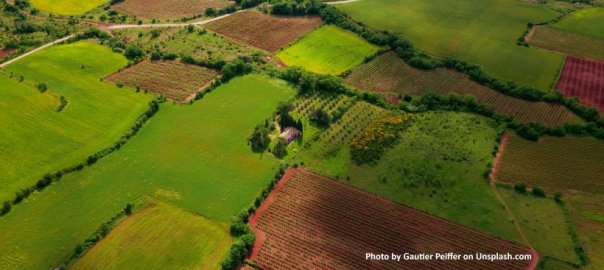

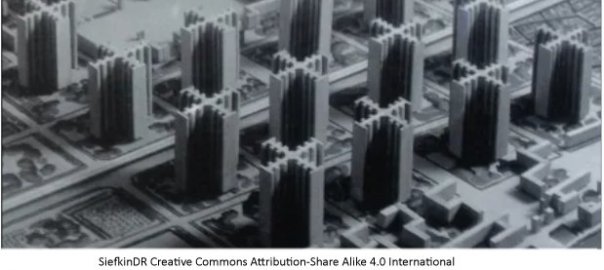
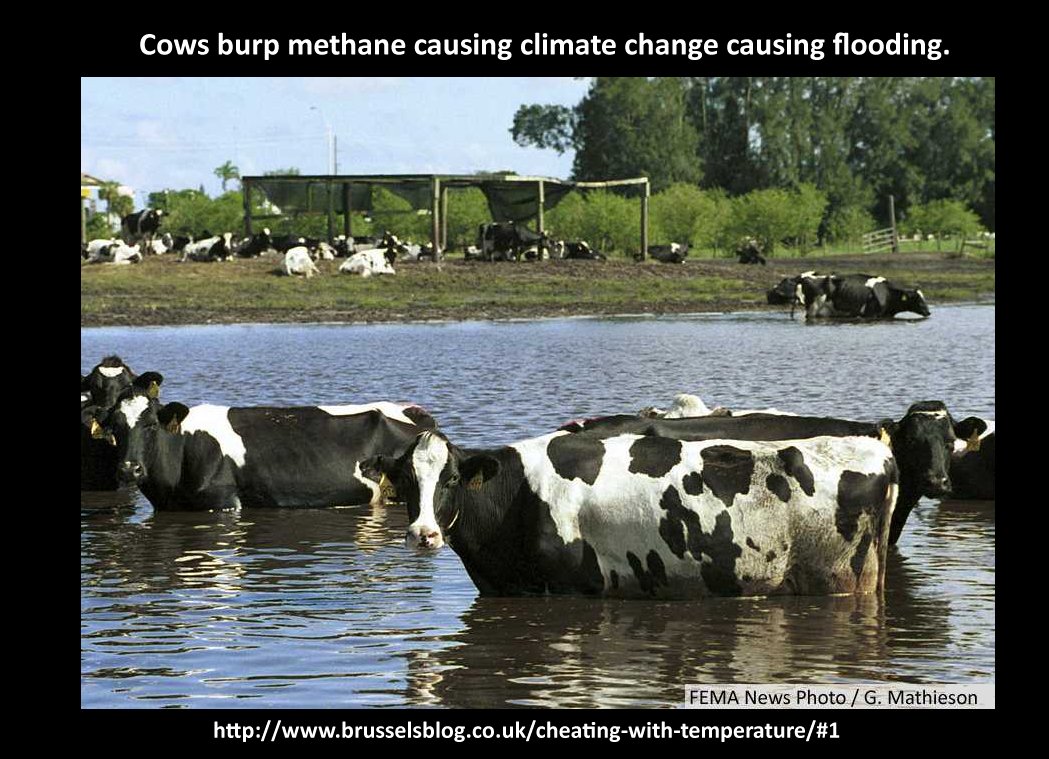

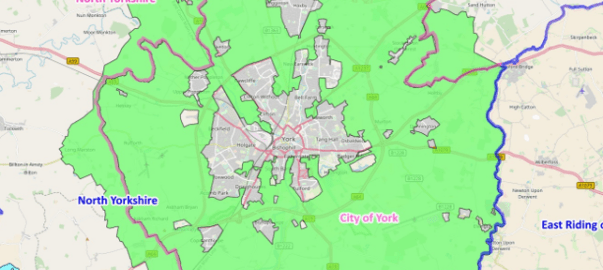


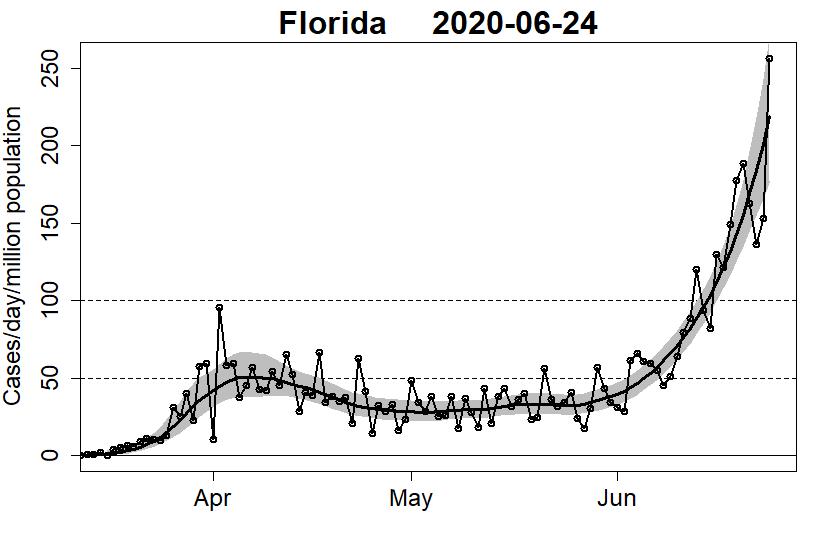


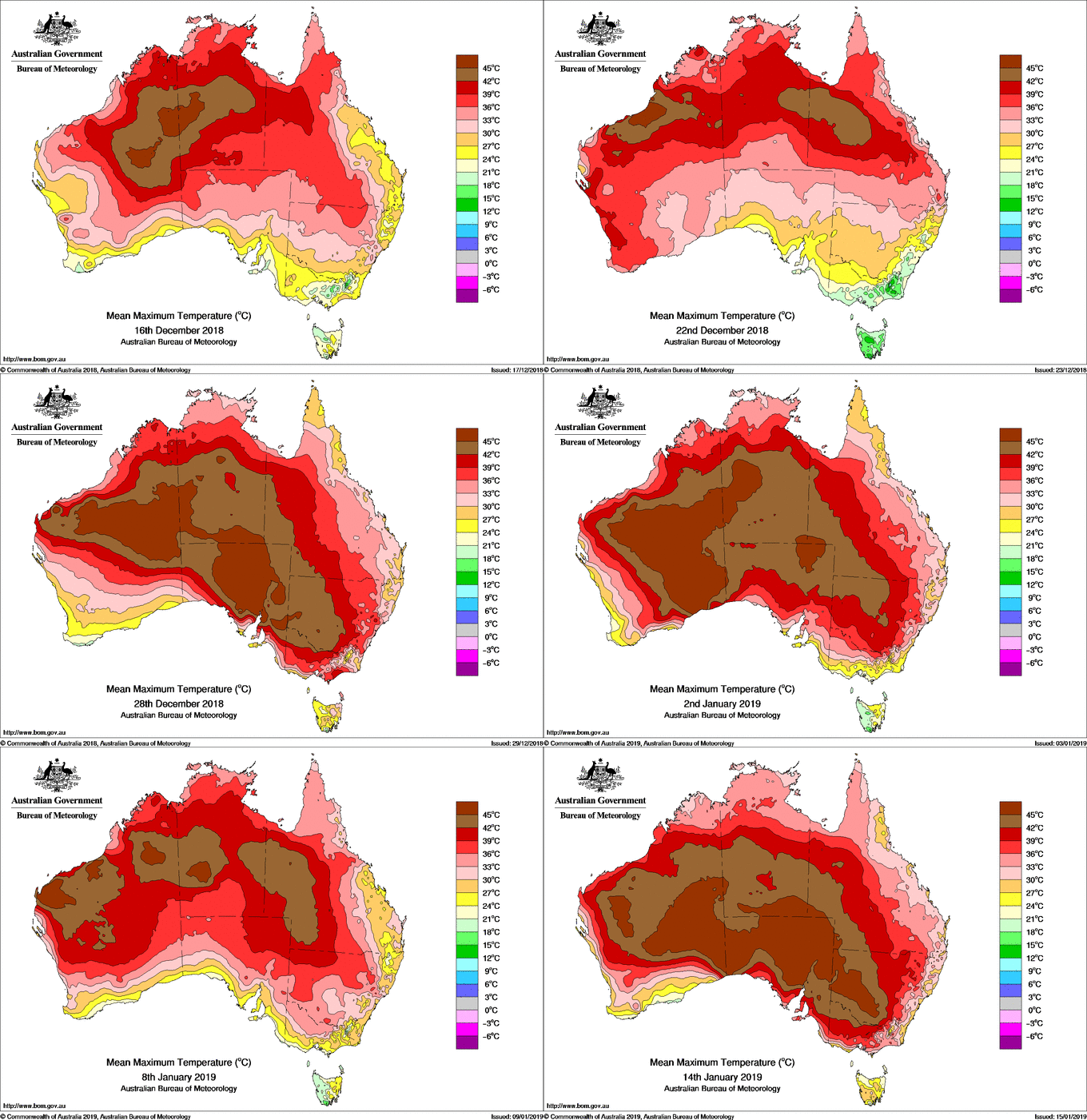

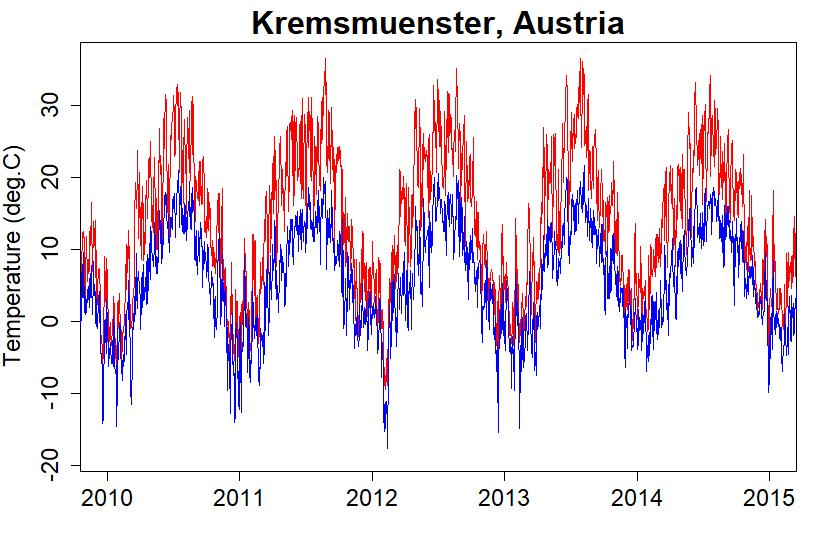





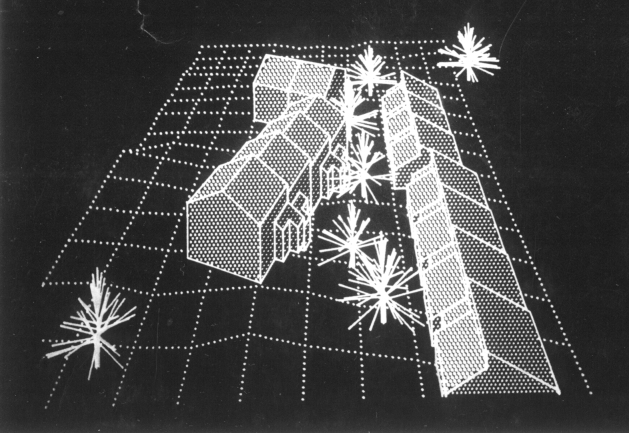
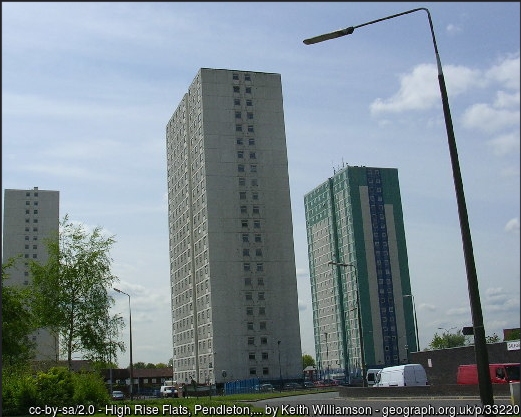


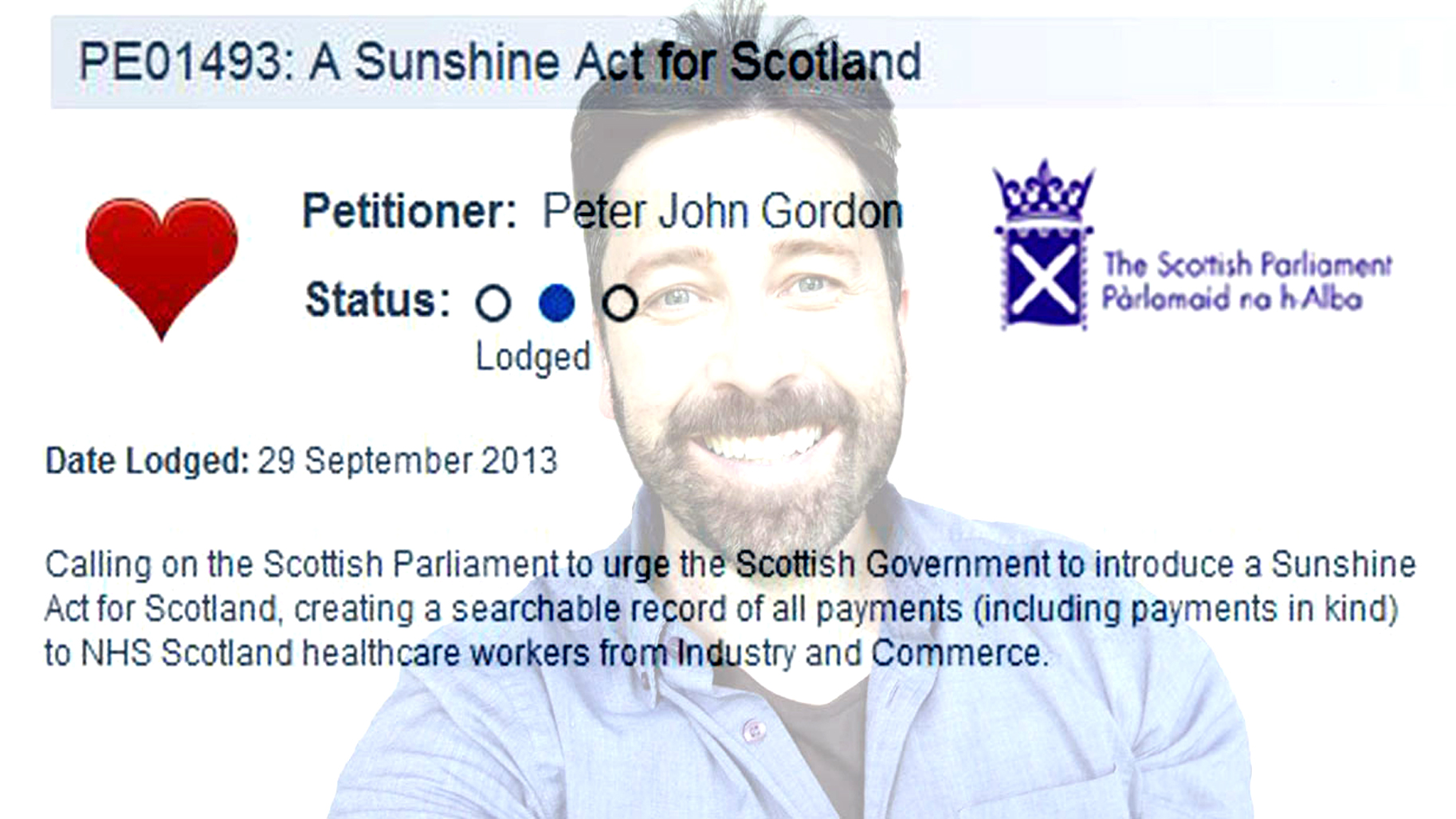

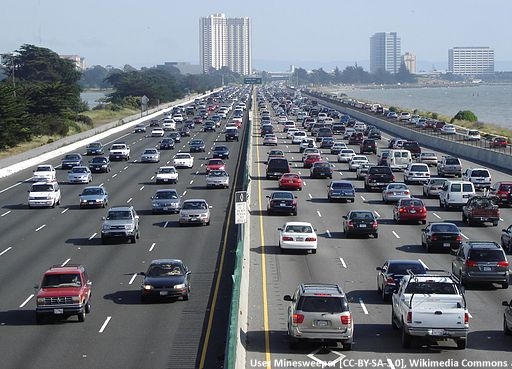

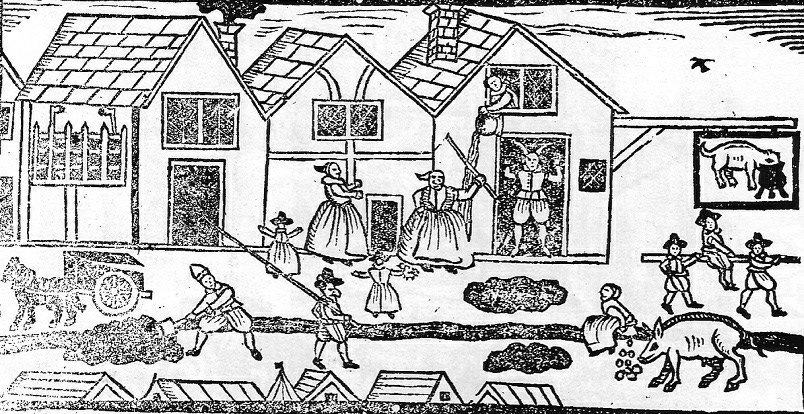


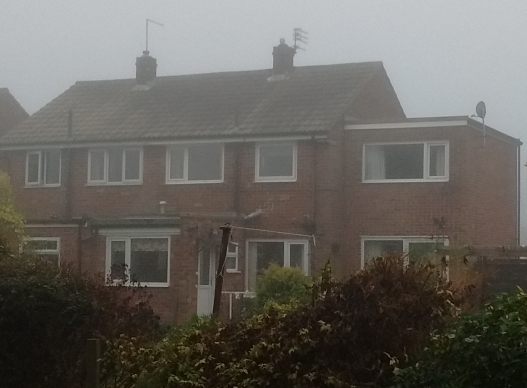


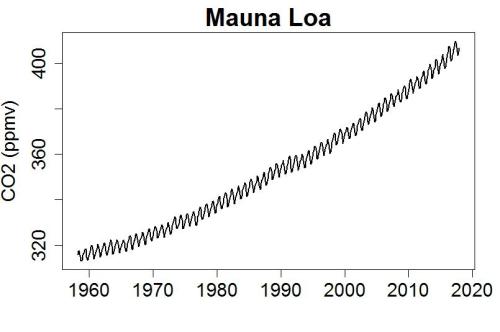

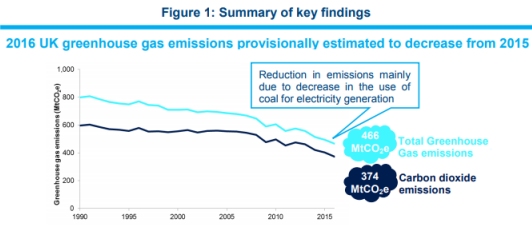





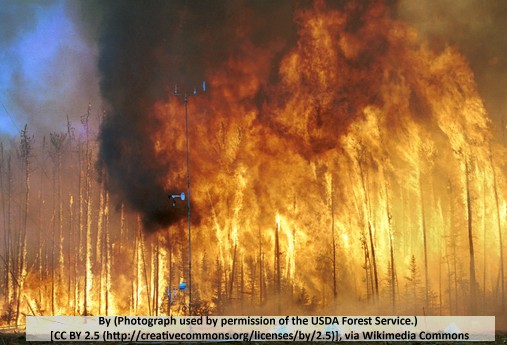

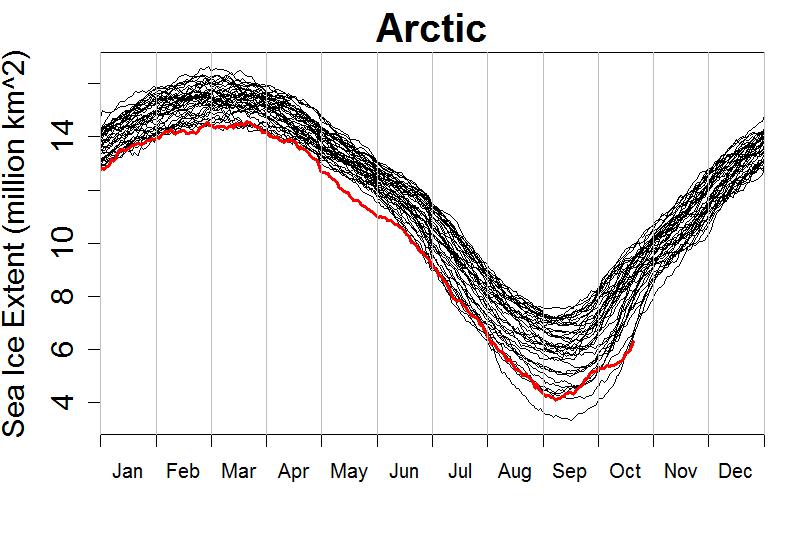
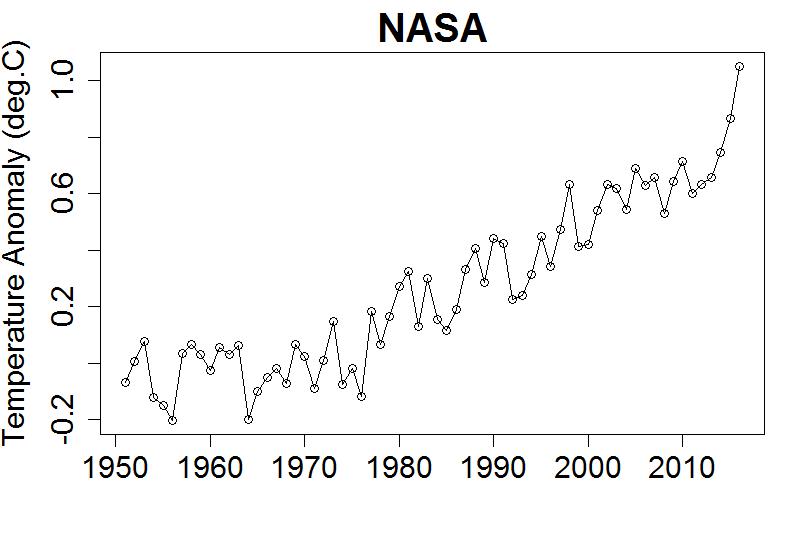


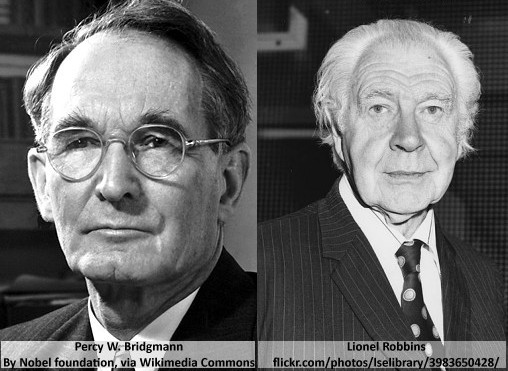
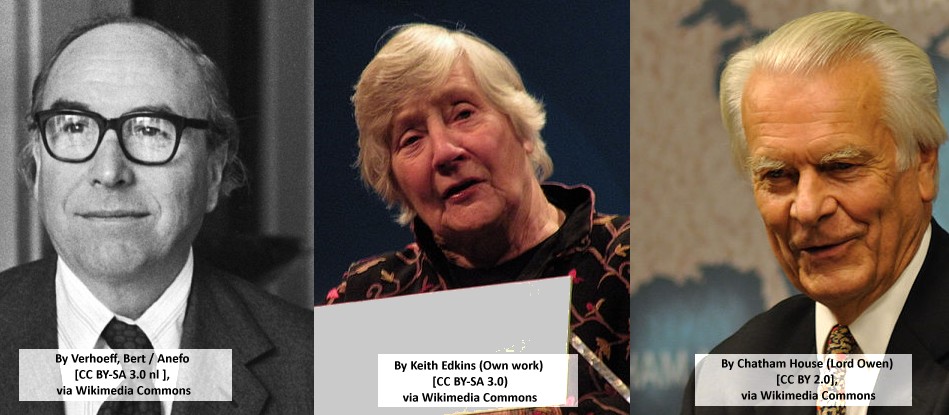

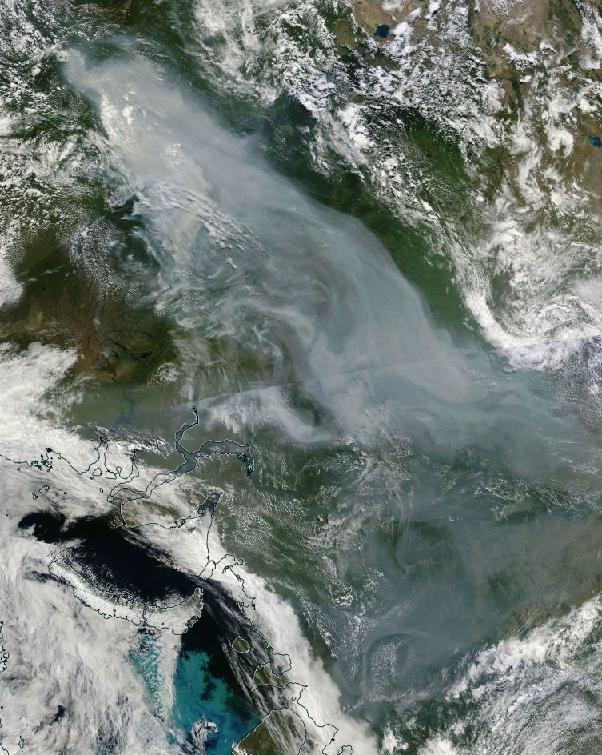
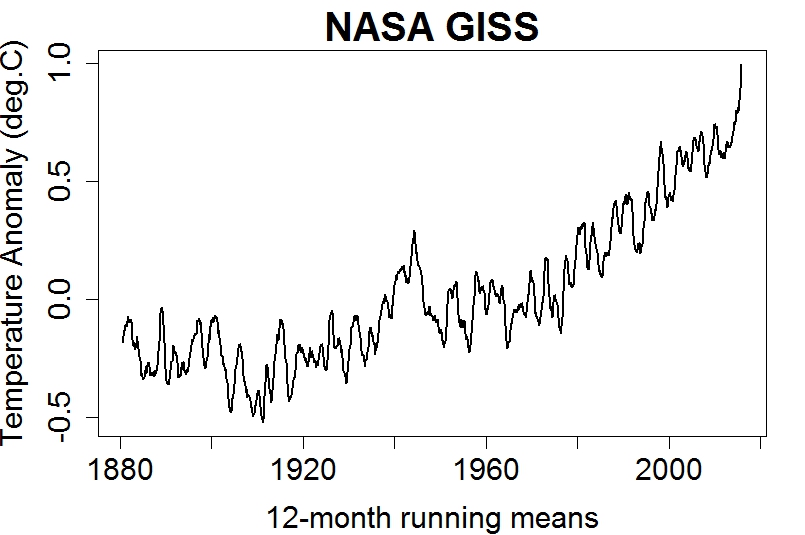
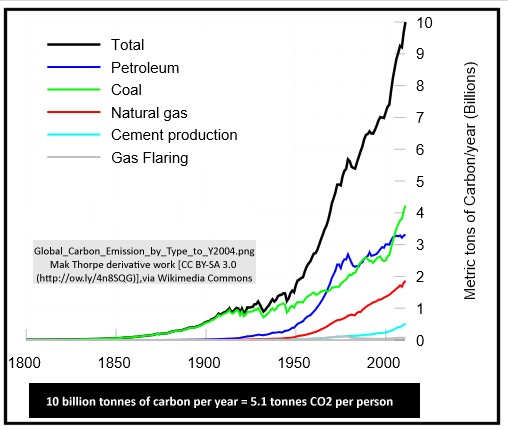
 Don't look now
